
Apartment and Condo EV Charging in Buffalo, NY
The first decision is not the charger brand. It is where residents will charge, who can approve the work, and who pays for the electricity.
Call to check provider availability for an apartment, condominium, or other multifamily property in the Buffalo area. Explain whether you manage the property, represent the association, or are a resident asking about one parking space. An accepting provider can confirm whether it handles that project type and what assessment is needed.
This is a demand-test pilot. No Buffalo-area installer is confirmed; calls currently ring the website operator and may go unanswered.
Updated October 14, 2026
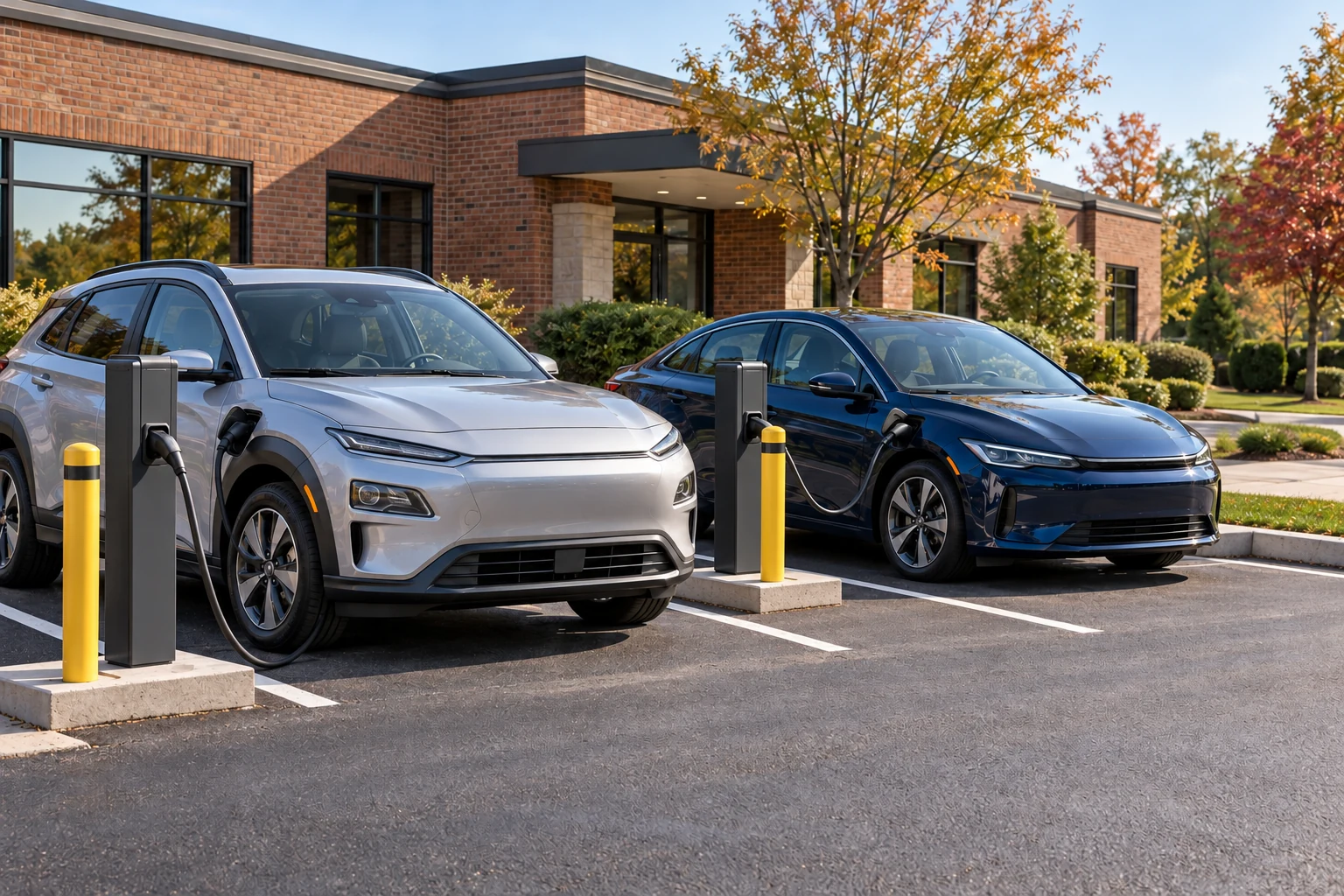
Choose an assigned-space or shared-space plan
Both approaches can serve residents. The better fit depends on the parking arrangement, electrical access, number of drivers, and property rules.
| Approach | What it means | Decision to resolve |
|---|---|---|
| Charging at an assigned space | A resident charges where that vehicle normally parks | Who owns the charger and how its energy use is paid for |
| Shared charging spaces | Residents use a limited group of charging spaces | How access, charging time, and moving vehicles are managed |
| A first-phase shared installation | The property adds a small number of ports before expanding | How utilization is measured and what triggers more ports |
| Infrastructure for later chargers | Selected pathways or electrical provisions are installed before all chargers | Exactly what is included now and what remains to be bought or built |
Avoid treating a shared charger as a complete plan by itself. If residents leave charged vehicles in the spaces all night, decide whether that is the intended use or whether other drivers will need access. Put the rule in place before the chargers go live.
The DOE's multifamily charging guidance identifies parking arrangements, electrical service access, billing, and legal considerations as issues for these properties. A site-specific proposal should turn those categories into decisions your property can actually implement.
For residents: get permission and scope aligned
If you rent or own a condo, do not assume that control of a parking space means you can modify the building's electrical equipment or common property.
Start by identifying the person or body that can approve the work. Ask the landlord, property manager, or association what information it requires from the installer. The approval may need to address the equipment location, cable route, ownership, insurance, electricity payments, and future removal.
Useful questions for the property include:
- Is the parking space assigned, leased, deeded, or shared?
- Who can authorize work along the proposed cable route?
- Who approves access to electrical rooms or common areas?
- What written proposal or drawings are required for a decision?
- Who owns the equipment if the resident moves or sells?
- Who pays to remove or relocate it if the space changes?
This page does not determine a resident's legal entitlement to install charging. Property documents, approvals, and applicable requirements need their own review. Tell the provider whether permission is already granted or still being discussed.
For owners and associations: define the operating plan
A property-wide project should state who is served on day one and how more residents will be added. Ask about current EV ownership and near-term interest, but distinguish resident interest from firm equipment commitments.
A hypothetical condo association might choose two shared ports first, reserve several nearby spaces for expansion, and review usage after a defined operating period. Another property might prefer charging at assigned spaces with a repeatable approval process. Neither is automatically the right answer for your building.
Before comparing hardware, decide:
| Question | Put this answer in the project brief |
|---|---|
| Who can charge? | Residents only, residents and guests, or public access |
| Where can they park? | Specific spaces and any limits on use |
| How is access granted? | Property-controlled credentials, a charging network, or another stated method |
| How is energy paid for? | Included amenity, usage billing, or another approved arrangement |
| Who handles problems? | Property staff, network support, electrical provider, or manufacturer |
| What happens next? | Expansion triggers, budget responsibility, and equipment ownership |
Do not assume the nearest panel can supply every space
The shortest visible route is only one part of the assessment. The provider needs to evaluate electrical capacity, the proposed charging configuration, access to the electrical source, and the route to the parking spaces.
Ask the provider to explain how the proposed system serves simultaneous charging. If power is shared, ask what a resident should expect when every port is occupied. If the quote includes a new panel or service change, ask which limitation that work solves and whether a different charging configuration was evaluated.
Planning for expansion does not mean buying the largest possible system immediately. It means knowing which part of the first phase can be reused and which constraints remain.
Make billing and ownership visible in the quote
An attractive installation price can hide recurring obligations. Ask for equipment costs, site work, software fees, connectivity, payment processing, maintenance, and warranty responsibilities separately.
For resident-funded equipment, establish who controls the account and whether access can transfer to a new resident. For shared chargers, establish who receives charging payments and how usage records are available to the property. Ask what happens if a network contract ends or a charging unit becomes unsupported.
Do not advertise a particular billing arrangement until the property, provider, and any network operator have confirmed that the selected equipment supports it.
Confirm site access and construction responsibilities
A multifamily project can affect several people even when it serves one vehicle. Establish who arranges access to electrical rooms, protects parked vehicles during work, communicates temporary parking changes, and approves pavement or landscaping restoration.
For outdoor charging, ask how the equipment and cable storage fit the property's snow-clearing route and normal pedestrian access. The design should also address applicable accessibility requirements. Those decisions belong in the site plan, not in an assumption that every available parking space is suitable.
Check funding before using it in the budget
Program status checked October 14, 2026: National Grid's Upstate New York commercial programs page says its Level 2 and DC fast charging Make-Ready Program stopped accepting applications on April 3, 2026.
Do not use an older rebate article to promise residents a subsidized installation. Confirm the utility at the actual address and current eligibility before committing to a funding assumption. Ask for an unsubsidized quote and any confirmed incentive separately.
Frequently asked questions
Can one resident install a charger without a property-wide project?
It may be possible, depending on permission, parking rights, the route, and electrical conditions. The provider needs a defined scope and approval from the party responsible for affected property. Call with your parking arrangement and approval status.
Should every parking space have a charger?
That is a planning choice, not a universal requirement. Assess resident demand, parking duration, shared-space access, capacity, and expansion costs. The proposal should explain what the first phase supports and how later phases are added.
Can residents pay only for their own charging?
That requires an equipment and billing arrangement suited to the property. Ask who measures usage, collects payment, handles disputes, and pays recurring fees. Do not assume a standard home charger provides resident billing.
Is condo charging priced like a single-family home installation?
Not necessarily. Common areas, parking distance, multiple approvals, shared controls, and construction can change the scope. A property-specific proposal is more useful than a generic home installation range.
Next step
Call with the parking arrangement and your role
Tell the person answering the town or ZIP code, whether you are a resident or property representative, the number of spaces involved, and whether approval has been obtained. Call to check whether a provider can assess your project.
We may receive compensation for a provider referral. The accepting provider confirms its qualifications, scope, pricing, design responsibilities, and scheduling.