
EV Charger Repair in Buffalo, NY
Your charger stopped working. The next step is to find out whether the problem is the charging unit, its electrical supply, the vehicle, or a setting.
Call to check EV charger repair availability in your town or ZIP code. Describe what changed, the charger model, and any fault message. An accepting provider can explain whether the issue falls within electrical troubleshooting, manufacturer support, or replacement work.
This is a demand-test pilot. No Buffalo-area installer is confirmed; calls currently ring the website operator and may go unanswered.
Updated October 14, 2026
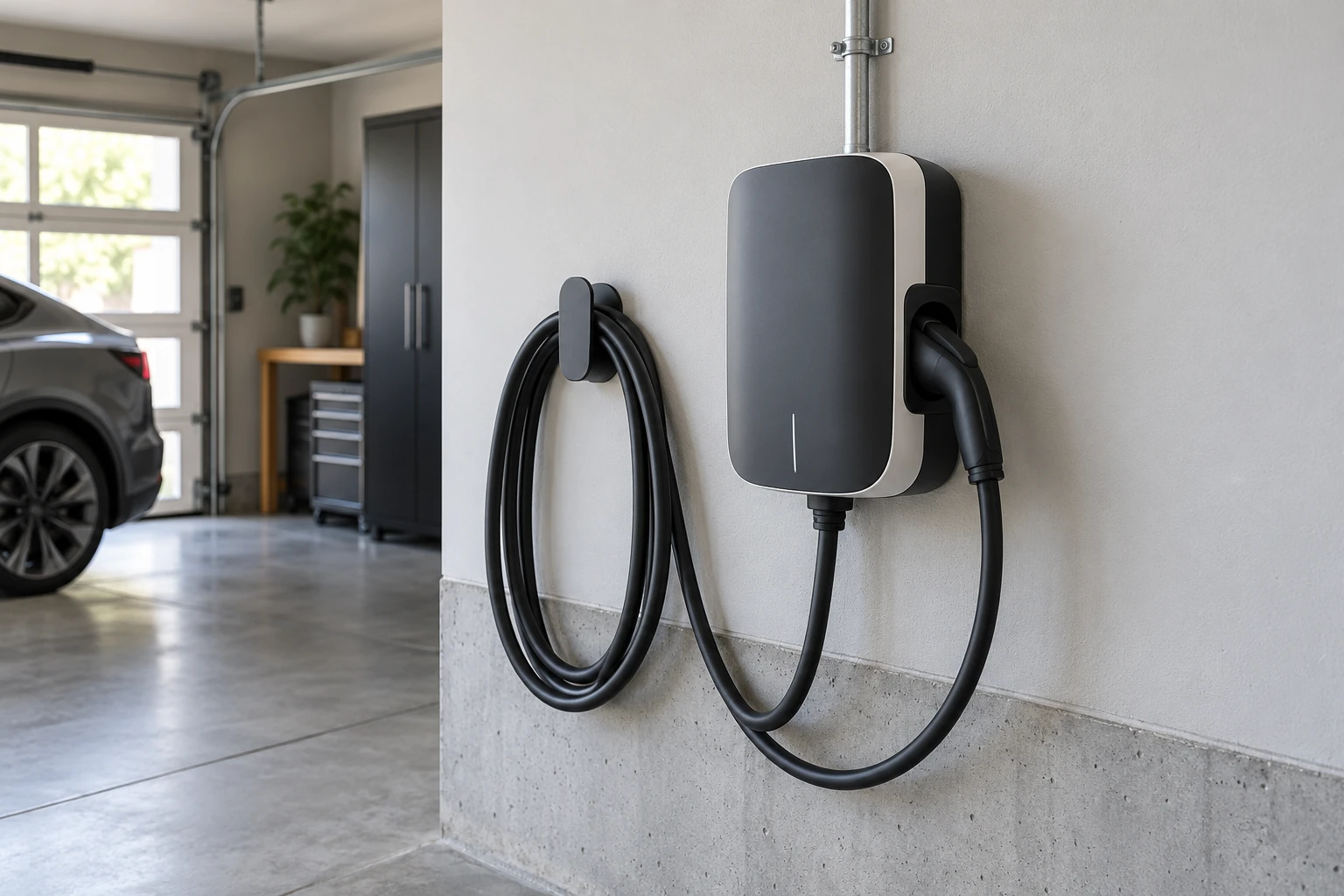
Not charging does not always mean a broken charger
A car that is plugged in but waiting for its scheduled charging window can look much like a charging fault. A unit that charges at a lower rate may be following an intentional current limit. A charger that disappeared from an app may have a connectivity problem rather than failed electrical hardware.
For example, Tesla's Wall Connector troubleshooting guide distinguishes a vehicle waiting to request charging, device configuration blocking a session, and a unit without incoming power. Those meanings apply to the models identified in that guide; another brand can use different lights and codes.
Tell the provider the exact message instead of saying only that the charger is broken. That helps identify the right kind of assessment before anyone prices a replacement.
What to report when you call
You do not need to diagnose the fault yourself. Have these details ready if they are available:
| Detail | Useful information to give the provider |
|---|---|
| Location | Town or city, ZIP code, attached garage, detached garage, or driveway |
| Charging equipment | Manufacturer, model, approximate installation date, and hardwired or plug-in connection |
| Vehicle | Make, model, model year, and whether its own display shows an alert |
| Symptom | No lights, session will not start, charging stops, lower speed, or app connection problem |
| Fault information | Exact wording, code, or the pattern of the status light |
| When it began | After a new installation, vehicle change, software update, outage, or damage |
| Work history | Who installed it and whether an installation or manufacturer warranty might apply |
Do not remove the panel cover, charger enclosure, or receptacle cover to gather this information. Use the labels and screens you can read without opening electrical equipment.
Three different problems need three different scopes
Electrical supply or connection assessment
If the problem involves the charging circuit, receptacle, connections, or related electrical equipment, ask whether the provider offers that type of troubleshooting. A diagnosis should identify the issue and the proposed correction, rather than jumping directly to a larger circuit or a new charger.
Repeated breaker trips, a damaged receptacle, or evidence of overheating need an electrical assessment. Do not keep restarting a charging session to see whether the problem happens again.
Charging equipment and manufacturer support
An electrical provider may be able to verify the supply while the manufacturer handles a hardware or firmware issue. Opening or modifying a unit can affect the repair path, so ask about warranty requirements before authorizing work inside the charger.
ChargePoint's Home Flex troubleshooting page separates scheduling and connectivity problems from charger faults. Follow guidance for your exact model, and tell the provider if manufacturer support has already identified a replacement requirement.
Vehicle or charging compatibility assessment
An alert can originate in the vehicle, an adapter, or the interaction between the vehicle and charger. Identify any adapter in use and confirm that the vehicle and charging equipment manufacturers permit that combination. A successful public charging session is useful history, but it does not prove that the home circuit or charger is fault free.
Charging slowly: fault, setting, or normal limit?
The advertised maximum on the charger is not necessarily the rate your car will receive. The configured installation limit, the car's AC charging capability, and any approved power management can affect charging power.
Tesla describes static, dynamic, and group power management as different ways its supported Wall Connectors manage available power. Dynamic or shared charging can intentionally change the rate. That is a reason to ask about the installation's configuration, not a reason to raise the limit yourself.
When you call about slow charging, report the displayed power in kW if you can, whether it used to charge faster under similar conditions, and whether another EV or household equipment is using the same managed capacity.
When replacement may be the better next step
A replacement quote can make sense when the manufacturer identifies a failed unit, repair parts are unavailable, damage affects the cable or enclosure, or the equipment no longer fits the vehicle and parking setup.
Ask the provider to separate these items:
- Assessment or diagnostic charge.
- Charger replacement cost and who supplies the new unit.
- Reuse of the existing circuit, subject to inspection and suitability.
- Electrical corrections required before the replacement can be used.
- Configuration, testing, and any required permit or inspection.
- Responsibility for returning or disposing of the old equipment.
A new charging unit does not automatically require a panel upgrade. The provider should explain the electrical basis for any additional work. See electrical panel assessments for EV charging and our installation cost guide.
Stop using damaged equipment
If you notice melting, scorching, a burning smell, exposed damage, or abnormal heat at the equipment or outlet, stop charging and keep people away from the affected equipment. Do not open it or repeatedly reset the circuit. Have a qualified provider assess it before charging again. For an active fire or immediate danger, call emergency services.
This referral line is for checking provider availability; it does not promise emergency response. A charger standing in water or damaged during a storm should not be treated as an app troubleshooting problem.
Frequently asked questions
Can every EV charger be repaired?
No. The available remedy depends on the specific model, the fault, the manufacturer's service policy, and parts availability. Some issues can be corrected in the installation; some units are replaced rather than repaired internally. Ask what the assessment covers before scheduling it.
Can I get a charger repair price over the phone?
The provider may be able to explain its assessment fee and likely next steps. A firm repair price may require identifying the fault first. Ask whether the diagnostic charge is separate from correction work and whether any minimum visit charge applies.
Should I contact the original installer?
That can be a useful first step when the installation is recent or the installer gave a workmanship warranty. Manufacturer support may be the right route for an equipment warranty. Keep those responsibilities separate so you do not pay for work that another party has agreed to cover.
Do you service commercial charging stations?
Commercial hardware, payment systems, and network support have different service requirements. Call to check the provider's scope. A residential charger assessment does not establish availability for a public or multiport charging site.
Next step
Explain the problem once. Start with the right assessment.
Call with your town or ZIP code, vehicle and charger model, and the fault you can see. Ask about assessment pricing, supported equipment, and the next available visit before agreeing to work.
We may receive compensation from a provider for a referral. The provider quotes and performs the work; this website does not diagnose electrical faults or provide a repair warranty.